Webinar: Ethnography’s Ghosts: Spectres, Archives, Ancestors
29 October 2026, 11:00-12:00 (UK time) Register to avoid disappointment Ethnography’s Ghosts: Spectres, Archives, Ancestors with Emer. Professor Paul Atkinson. This talk introduces Ethnography’s Ghosts, edited by Emilie Morwenna Whitaker and Paul Atkinson. Their previous collaborations include Reflexivity and Social Research (Palgrave 2022), Ethnographic Explorations (Routledge, 2023) and methodological […]
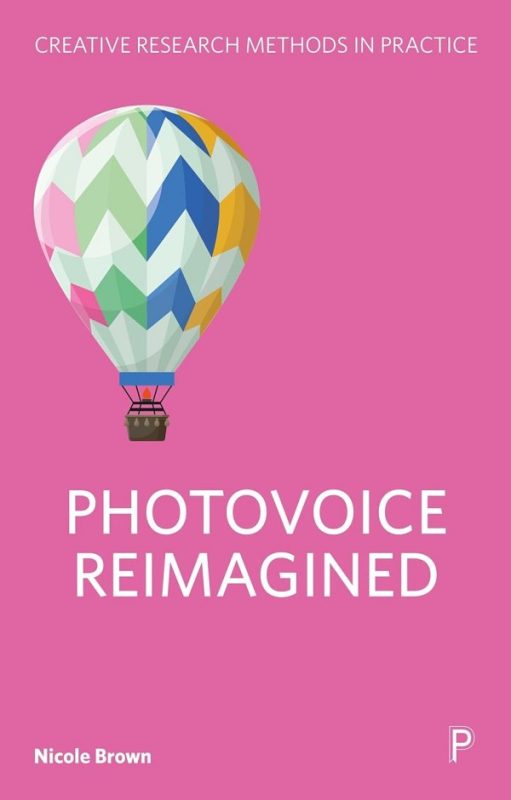
Book: Photovoice Reimagined
"Photovoice Reimagined" introduces photovoice as a method and photovoice as a framework to enable a more participatory approach to research.
In conversation with REA (Research Ethics Association)
I was asked to an “in conversation with REA”. The Research Ethics Association (REA) brings together academia, industry, and local organisations across all disciplines with the aim of promoting and implementing cross-discipline research ethics, while contributing to ethical practice and research standards. Specifically, I was asked to elaborate on a […]

How to keep a research journal
This post links to my contribution to the Lex Academic Blog, in which I write about how to keep a research journal.
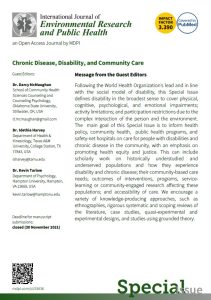
Article: The social course of fibromyalgia: resisting processes of marginalisation
This article reports an empirical study into the lived experience of fibromyalgia, which led to the identificiation of four forms of resistance against processes of marginalisation amongst those who have been diagnosed with fibromyalgia.
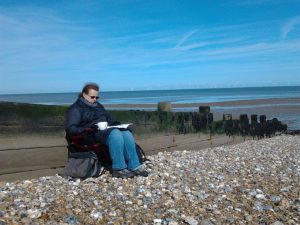
Supervising PhDs: Dealing with ‘atypical’ students
This is an extract from a guest post on the Supervising PhDs Community Blog, where I explore the experience of "atypical" students, and what research supervisors can do to better support those "atypical" students.
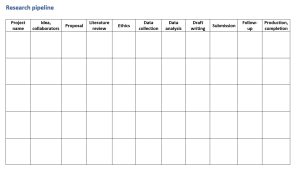
The research pipeline: managing the publications process
This post outlines how to maintain a research pipeline to plan and manage publications systematically and links to a word template.
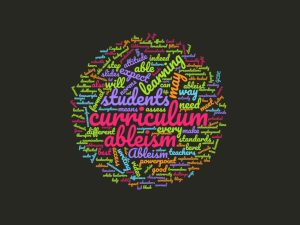
Ableism in the curriculum
In this post, I explain what ableism in the curriculum is, and what we as teachers can do to counter ableism in the curriculum.
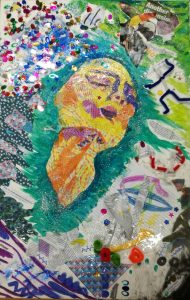
Creative methods – messy data?
This is to stimulate a discussion around boundaries of research, ethics and ownership of "messy data" resulting from creative methods.
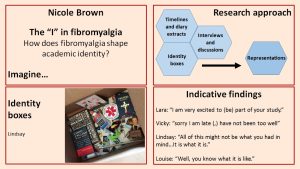
3min thesis 2016
The 3 min thesis is a competition, but it helps focussing thoughts and concentrating on what is important. Here is my "3min thesis".
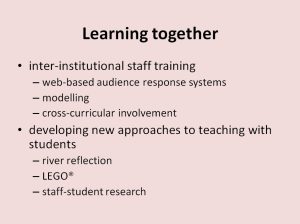
Presentation from the SEDA conference
This is about my contribution to the SEDA conference in November 2016, which was about aspects of the Secondary Teacher Education Programme.
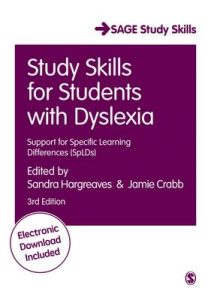
Book review: Study skills for students with dyslexia
This review is about "Study skills for students with dyslexia". This is a good resource for teachers helping prepare students for University.

Preventing plagiarism from the UCLTL conference
See feedback from the conference workshop about Preventing Plagiarism and the Role of Identity Codes.
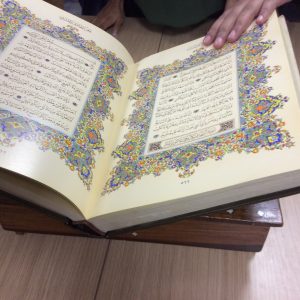
Teaching with artefacts
Artefacts can be used to get students interested in a lesson, but artefacts can do more than just represent an engaging hook. In this post I am discussing the use of artefacts in lessons based on questions that I have been asked in teacher training sessions.
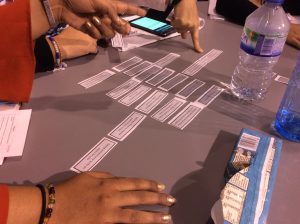
Types of plagiarism
Irrespective of the types of plagiarism, ultimately plagiarism is a punishable offence. Therefore, it is a good idea to get fully acquainted with the different types of plagiarism in order to be able to effectively avoid difficult situations. You are best advised to err on the side of caution and therefore credit too many authors and originators rather than not crediting others enough. Plagiarism is not a trivial offence, but theft and will be treated as such, irrespective of whether or not you plagiarise intentionally or unintentionally.
Contact
Comments and questions are welcome.